Today, Jack from DPRK Forum considers what North Korea may be like after Kim Jong Il.
Increased speculation into the scenarios of a post Kim era are mired in serious problems that cannot be avoided no matter what road it may take. While nobody knows the future, it is increasingly clear something is taking place in North Korea: Kim Jong Il’s reported health problems, the shakeup in the hierarchy leading to an apparent military-centric regime, the apparent succession of Kim Jong Un, and the list goes on and on.
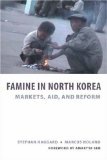 Despite these changes, true or false, very little is said about the people having to live under these changes and the ever-changing political winds. These changes are not only from Pyongyang, but Washington, Seoul, Beijing, Tokyo, Moscow, and others. These winds of political change inside and outside their secretive state lead to things that directly affects their lives, and it appears the populace is starting to fend for themselves. As more evidence shows they are not counting on the government to take care of them, time and again it goes right down to control from the top trying to deal with the shifting sands of bottom-up marketization (Please see Famine in North Korea: Markets, Aid, and Reform
As these important changes have been taking place since the Arduous March of the mid-late 1990’s, it is still unclear the true extent of the market activity in North Korea. However, plenty of evidence shows market activity is definitely there as the regime appears to try and solve the problems of Juche purity. Is the regime losing control of the population? If so, it is clear they are trying a lot of things to bring North Korea back on track, which may be in a time of vulnerability as rumors of succession and Kim’s health continue to swirl around. To be sure, discussion of Kim’s health is a long standing taboo, along with succession. In my opinion, it is too early to speculate the true heartbeat of the North Korean mindset on these matters, because sooner or later, these things will come to light when something does happen. The problem is, what will happen?
Nobody knows anything about that either.
China’s North Korea specialists and think tanks are studying possible post-Kim futures, from a peaceful transition to a new government to factional warfare, Cui and other experts said.
Cui attended North Korea’s Kim Il Sung University nearly 50 years ago. He regularly hosts friends from his school days — retired civil servants, policy researchers and other members of the North Korean elite — at his two-story house in Beijing’s north suburbs. Recent visitors, Cui said, have described a power shift, with Kim Jong Il throwing his support behind military hard-liners and away from economic reformers to ensure the succession of his son, Kim Jong Un.
Even if that transfer goes awry, Cui said, the most likely outcome is neither meltdown nor reunification with South Korea but a successor regime, perhaps a military government, in Pyongyang that will need Beijing even more. "The hard-liners will have to rely on China because they won’t have the political power to deal with the United States," Cui said.
This I have to agree with, but again, timing is critical on how things transpire, and the ultimate fate of not only North Korea’s future, but the political map of the major players dealing with North Korea. One of the biggest issues not really discussed is the question of the normal populace. Sure, the other items, such as loose nukes, possible factions running around, dealing with a different regime, and many other things (I am sure they will be key on how the population reacts) will also be key on how to tackle the real possibility of one of the biggest humanitarian problems in modern history.
I am very doubtful on a smooth reunification of Korea, but the reunification question is something that is another thing mired in serious problems. However, the rhetoric on the need of reunification is filled with kicking the can down the road along with hoping the status quo not changing. After all, there are better things to worry about for the major players. From pop culture, economic difficulties in the world markets, partisan infighting, and more. However, sooner or later, these questions will have to be dealt with, and hopefully not in crisis mode.
What are the major players doing about the humanitarian crisis that is surely looming in the background? Again, good rhetoric is coming out of the spin room, but the player that makes all the difference in the world is China. Problem is, they are not talking, and with good reason. The same article points this out:
If China eventually decides to discuss a North Korean implosion with the U.S., the governments would probably be better served by letting their militaries, not civilian officials, do the talking, said Thompson, with the Nixon Center.
A meltdown would likely displace large numbers of people, and the People’s Liberation Army has displayed its ability to cope in handling natural disasters like last year’s Sichuan earthquake. PLA researchers told a group of U.S. scholars in 2007 that contingency plans were in place for the Chinese military to handle North Korean refugees and even go in to secure nuclear weapons and clean up nuclear contamination.
"So you can bet they have a plan for North Korea," said Thompson. "Will we ever see it? Hell no. Do they have it? Yeah."
As the book discussing the great famine also pointed out, China’s dealings with North Korea are client privileged, so any information with respects to trade and what they plan to do in a post-Kim regime are thin if non-existent. The question is, will China talk in the event something happens? This is also a toss-up because China has interest in not angering the regime (or some other regime if any) should anything come down the pike, because China has interest in the other players as well. That is, they have a lot at stake. From keeping the USFK away from the Yalu, keeping the nice trade agreements with the world markets (especially the United States) and not having to worry about the scores of hungry North Koreans fleeing a failed state.
 Another book, also penned by Marcus Noland is Korea After Kim Jong Il
What happens to them? Surely, they will need some stability, and individuals have different ideas on trying to survive. From the elites that may have incentive on keeping their perks or exploiting the situation, to the normal populace getting displaced, down to the political prisoners languishing in the massive labor camps. Surely, these individuals will need immediate attention to keep the others players stable, and it is my hope some plan is in place to deal with these things. Yes, there may be Utopic plans to magically get everything in line in the event something happens (such as the Sunshine Policy), but this is the real world, and nothing in the real world goes the way they plan. There has to be a plan B somewhere. Unfortunately, coddling a regime that constantly reneges on agreements is clearly not the way to go. Also, waiting for the despot leader to croak may make things worse instead of better as well.
This is a crapshoot, and all the players know it. Issue is, who makes the first move to risk their neck to do something about it? Sooner or later, there may be no choice. That is, from a Hail Mary move from a dying regime to masses looking for a new life will be hell.
Maybe the answer is not the high-level politicians. The answer may lie in individuals. They are already trying to survive in the markets, and despite the regime’s efforts in cracking down on these activities are choppy at best. Could it be one day the officials trying to keep the purity alive give up and try to survive too? Some evidence points to this as well with the massive corruption. I mean, one can bribe an official with some cigarettes, booze and goods to look the other way. Technology is also breaking down the iron-clad barrier that kept the hermit Kingdom sealed for so many decades. All of this seems to be the doings of the normal populace. At the moment, the iron grip of Kim Jong Il is still there and repressive as ever, but with the current shakeups, could this be a good time to exploit the situation and push them over the edge in the effort to see where it may lead? That is a very risky move, no doubt about it. Eventually, the regime will not be able to focus efforts on elites to keep them in line, because they are in a bribe situation in return for goodies from Kim, they keep the loyalty alive. That may very well end somewhere. Will they turn on the regime or jockey for power? I have no idea.
In the end, I think it is going to boil down to food. I cannot see any other possibility, because at the moment, food is the basic source of survival, and I am going to guess whoever controls the food controls the country. At the moment, the food is increasingly becoming the property of the people despite the ongoing efforts to keep the old Juche system in place. If one can sell grain on the market at a better price than the regime’s paltry and even non-existent payments in return for redistribution, why bother (other than fear of getting shot)? That has been the pillar of social control in North Korea, and as domestic supply falters or is unstable, outside sources are a considerable variable, too.
Could the population show discontent when aid is not going to those who need it and instead redistributed to areas more important on keeping the regime alive? What about the market diversion? How about trade in other commodities or simply liquidation? China may have a huge role in all of this, and wheeling and dealing is surely to take place, not only with North Korea (or whoever is in the driver seat) but others as well with interests in the region.
Maybe it is time to show people care about people. After all, the person behind the barbed wire will have a lot to offer somebody else when a regime failed them. However, they are going to need a helping hand. Who is going to step up and embrace the mother who lost her child, the orphan, the displaced worker with no job, an elite looking to strike a deal on some good flats in some city, or some outsider looking to make some money in the resources? What about the prisoner who does not know anything other than fear and hunger? I do not hear anything about this on the nightly news.
One day, it will be headlines.
This post was written by Jack, author of the blog DPRK Forum. In Jack’s words, DPRK Forum is based on his “obsession with trying to understand one of the most isolated, secretive states on the planets.â€

 Subscribe via RSS
 Follow on Twitter
